Curtis Ogden is a Senior Associate with the Interaction Institute for Social Change (IISC), where he has worked for 20 years. IISC does collaborative capacity building work in support of social change leaders, organizations, communities and networks. Curtis is a process designer, facilitator, coach, network strategist and trainer.
We sat down with Curtis this November to talk about how his thinking on networks has changed, what he’s noticing across the field this year, and why he believes funders and investors can’t keep treating networks as an afterthought. He also shares how to practice discernment when systems are unraveling, what equity looks like inside a network, and the practices giving him hope as we head into 2027.
“Networks are just a reality of life, they’re what support us every day, and so it’s helping people to see the patterns of connection and flow around them, so that they can work with those and ideally help guide us all to a better place.”
Alexandra: You’ve been working with networks for about 20 years. What has shifted for you along the way? Is there anything you used to believe about networks that you see differently now?
Curtis: For me , I would say the biggest shift is how I see networks. Maybe 15 years ago I started to have this sense that the way that we talked about networks was not quite getting fully at their potential. The way I used to talk about networks was, “We need to build networks so that we can do something.” Later, I realized that networks “are”; they’re just an existential reality. So getting curious about the networks that already exist and support us, or maybe they don’t yet in sufficient ways, feels like a good starting point. The other thing that I have learned to appreciate is that when we map a network, generally, you create this kind of frozen image of nodes and links, which can be helpful to a certain extent. But we have to remember that it’s frozen. It’s like a photograph and as soon as we take the picture, it’s changed, because networks are dynamic. So what we have to remember is that the frozen image is frozen, and that networks are characterized by dynamic movement. By life! The links that exist between nodes characterize different kinds of exchange that are happening within a network. Now, I’m more interested in what is the nature of those exchanges and those flows. Some of those flows are more obvious, and some of them are less obvious, and all of them can be very important for us to understand the health of a network. So, it can be helpful to go beyond just a snapshot of nodes and links to things like value network analysis, or VNA, where you consider what’s being exchanged by different members of a team, or of an organization, or a community, and how that supports not just those nodes but the system as a whole.
It’s important to understand that systems are networks. This can help us to understand system change as being fundamentally about network change. We change patterns of connection and flow as a way of changing systems.
Alexandra: It’s all about relationships and how we nature them. That’s why it’s so dynamic. What you’re saying about system change makes me think about how change happens when networks organize. Connections form, people have conversations, and those conversations link networks together. We all have our own networks, and we activate them by starting those conversations. We don’t have to build a network around an issue. At its core, a network can form naturally.
Curtis: Exactly. I remember some of the early conversations with Leadership Learning Community and with June Holley, where we would talk about this important two-step process. First you have to become aware of the networks that are around you or that you are in, and then you become intentional. If you’re not aware, it’s hard to be intentional or strategic, and just because you’re aware does not mean that you are intentional or strategic, so it’s important to be both aware and intentional.
Alexandra: You get to share space with so many different networks. What are you noticing across them this year that feels different?
Curtis: I think we’ve been on this course for some time now of people being tired, and on the edge of burnout. We’ve been through some very challenging political times. We’ve been through COVID, and this tech disruption we’re going through with AI. It’s exhausting. I think it’s both new and part of a continued trend where the cry for “we need more capacity” is just stronger and stronger across networks. Network coordinators that I know who are the only people in their role are getting a little bit louder about how this is just not sustainable, that they cannot be the only ones coordinating these networks.
There’s a need now to seriously educate funders and others about why networks are important, and why they need investment, and why they can’t be an afterthought.
The other part of this question- Are there patterns that have surprised me? Well, I guess I would ask – How long have we been talking about networks and the importance of investing in them, and how many funders are actually doing that now? I want to have some compassion for funders, because I have friends who are program officers in foundations large and small, and they’re overwhelmed by the demand out there. And there’s a lot of other money out there. A decade ago, we were talking about social return on investment as opposed to just financial return on investment. So what surprises me is that people still are not stepping up. Are they only going to continue to place bets on heroic individuals and organizations, or are they going to start investing in networks and ecosystems? It’s really time. It’s way beyond time. Also, we can’t be in these network weaving circles talking about small amounts of money. We need macro shifts in the environment and the economic landscape. So I want to invite funders, investors, and network weavers themselves to say, “We need investments of many millions of dollars to build the new infrastructure, to create the new systems. Let’s be bold!”
Alexandra: You’ve written about being in the middle, where a lot of us in network spaces live, network weavers included. How is that landing for the weavers and intermediaries you work with, and what do you wish funders could see?
Curtis: There is a shared desire amongst many with whom we work to have people, at least some people, step back and look at this bigger ecosystem. The science of energy systems shows that a healthy network or a flow network is built in some respect like a river delta, or the branches of a tree, or the veins in a leaf. There’s a branching structure, and that helps to move crucial resources of all kinds through a system. So you have a few big things on top, a bigger middle, and then an even bigger ground-level array of systemic players. And what happens with a lot of social systems is the top starts to suck up resources because it is unchecked. Greed takes hold, and there’s increased consolidation. You see this in healthcare systems and food systems. Often there’s a hollowing out of the middle, and then you get all these folks on the ground who are then fighting over crumbs. I’m watching as funders are giving, importantly, money to grassroots organizations, and there are so many cases where, when you don’t build out more of an infrastructure that includes the middle, then you don’t have a resilient or an efficient system. We really need to pay attention to the middle. Not at the expense of the grassroots, but for the benefit of both and whole systems. I wish more funders and investors could not just see that, but I wish they would act on it. And to do so by following the lead and wisdom of those who are closest to the point of implementing real change on the ground.
Alexandra: Your piece on unraveling has so much in it. When so much is coming apart, how do you figure out what to protect, what to transform, and what to let go?
Curtis: Making time and space is the first step to consider those things. I’m holding people, all of us, with compassion. We’re going through a lot, and our nervous systems, individually and collectively, are largely dysregulated. It can make us feel like we’re constantly in survival mode, which, of course, some people definitely are. I’m also seeing certain people act out of survival mode where I don’t think it’s necessary or helpful. The result is “do, do, do” – “go, go, go.” Never step back and ask yourself questions about what is the best course of action, what others are doing, what the gaps are, how we can work better together.
Things are unraveling. They had to… the systems that we have, dominant systems, are taking us to extinction if we don’t change our ways. It’s a totally unsustainable society we’ve created, so it has to unravel. That’s inevitable.
Even as things unravel out of necessity, there are certain things we need to preserve: key relationships, taking care of each other, making sure that those who are most vulnerable have what they need. Then we have got to get work on the new stuff. But if nobody’s pausing, if no one’s reflecting, or just doing it in isolation, we won’t get there. We’re going to go down the road to ruin and be left with ashes and trying to figure out what to do with that. As we wrote in that piece about unraveling, we use the metaphor of forests that have to burn, in low intensity ways, to make room for the new. Burning is not a bad thing. It is essential, literally and metaphorically. It is necessary to release certain energies so that things can be rearranged and reorganized to build something better. So, I’m hopeful that we can normalize the unraveling to a certain extent. Not all the chaos that is being created by certain people and groups for their own benefit, but the unraveling that is a natural part of evolving. Then if we stay curious as we move through this, we can ask, “What can we let go of and how?” We might have a memorial service for all that, and then let’s start bringing in the new. I think the key to practicing discernment is to make space and time happen.
Alexandra: This reminds me of LLC’s EcoCycle, which we adapted from Liberating Structures’ Ecocycle and our Liberatory Leadership Framework. It maps how change moves through a living system: we plant seeds and take action, grow into mature trees, harvest and learn, then prune and compost through creative destruction, which returns nutrients to the soil for renewal. Each point in the cycle calls for different energy and different types of leadership, from visioning and innovation to execution, collaboration, network weaving, reflection, and healing. It also names the traps that keep us stuck, like burnout, rigidity, scarcity, and despondency. When we start naming those steps, I think it calms a little bit of the anxiety we hold, and invites us to start thinking about change differently. Change is inevitable, but what we can control is how we react to change and the way we see the opportunities in it.
Curtis: Absolutely. The ecocycle comes out of ecosystem science, and it’s been around for years, looking at how forests progress to greater biodiversity, and how, through burning, more fauna and flora can grow and flourish, which creates more resilience in the system. We are expressions of nature and part of these ecosystems, and so it feels like a deeper appreciation for how we’re being invited to unravel and reorganize -it’s just natural and needed. And again, it is very important to practice care through all of this. Alexandra: What does equity look like inside a network? And how do you help people notice who’s on the edge and make room for them to lead or push back? Curtis: Equity in networks is like equity in any kind of social system. We at IISC define equity as when everybody feels like they have the resources and the support necessary to determine their own futures going forward, regardless of social position or identity. You probably know this metaphor … Diversity at a party is when you see a lot of different people, identities, faces in the crowd. But that’s not the same as everybody feeling like they’re included in that party. If they’ve been included and offered their input, there might be aspects of that gathering that make them feel like, yeah, this was designed for me. But that’s not the same as equity. Equity is where there’s a kind of collective determination of how that gathering plays out in a way that instills a sense of belonging for all, and especially for those who feel like they’re not considered and are living on the edges of the system. There’s also this important perspective that people who live most with the failures of the system are generally the most informed about it, because they see it clearly. They have to navigate these failures daily for their own survival. So those living in poverty, those of certain identities, those with physical disabilities. You want to include those people who are otherwise marginalized to be centrally involved in what you’re designing, so that it works for them. Angela Glover Blackwell, formerly of PolicyLink, used to use the metaphor of curb cuts. When people created the cuts in curbs so that wheelchairs could cross streets more easily, that then also benefited bikers. It benefited people pushing strollers. It benefitted those who may feel less steady when stepping off of a steep curb. When you design for those most on the margins, this can benefit others as well – it’s not a win-lose situation. Ideally, those on the edges don’t have to push back, because they’re right there as designers of the better system.
In terms of practices, for me personally, it starts with believing that we can do better, and believing that we’re being called to a more beautiful, inclusive, equitable future. Part of that practice is slowing down, staying grounded, and tuning into who we are being called to be and what we are being guided to do next.
Alexandra: What’s giving you hope right now? Are there small experiments or sparks that are exciting? Any practices you could invite our community of weavers to try together in the year ahead? Curtis: There’s so much to me that’s promising and hopeful and that’s actually happening. We’re getting to work with networks in California that are focused on organizing farm worker communities to create new governance systems to protect their dignity and negotiate for really significant economic benefit from the solar industry. We’re working in Mississippi and the Mississippi Delta, supporting people who have long been oppressed to stand up for food justice and to become primary stewards of land, farms, and farm-related businesses. We’re supporting work with Indigenous peoples in different parts of the country to reclaim their burning traditions, which is a win-win for them, for their communities, for the land, for climate. We’re working with legal aid and other social service providers in Washington, DC to weave a District-wide network of those committed to ensuring there is justice for all DC residents. We are working with the Alliance for Digital Equity, which is a robust urban, suburban, rural partnership in my region of western Massachusetts to ensure that everybody has digital access for healthcare, employment, and creating an overall sense of wellbeing. There’s just so much. We just feel blessed to be able to do this kind of work in these times.. In terms of practices, for me personally, it starts with believing that we can do better, and believing that we’re being called to a more beautiful, inclusive, equitable future. Part of that practice is slowing down, staying grounded, and tuning into who we are being called to be and what we are being guided to do next. Another practice of mine is reminding myself that the vast majority of people are good and kind, and they want better for themselves and others. We are driven to division and distraction by powerful interests that at base are fearful and not well. So let’s remember that there are many, many more of us on the right side of this, and let’s just act like we are in this together.
An invitation to join, The Transformative Power of Networks: Lessons from a Decade of Systems-Change Work in Mississippi with Curtis Ogden and NPQ. Live on Thursday, February 18th, 2027.

Curtis Ogden
Much of Curtis’ work with IISC entails consulting with multi-interest-holder networks and complex intra-organizational change efforts to ultimately strengthen and transform food, public health, education, and economic development systems at local, state, regional, and national levels. He has worked with these efforts to launch and evolve through various stages of development.
Alexandra Urdaneta
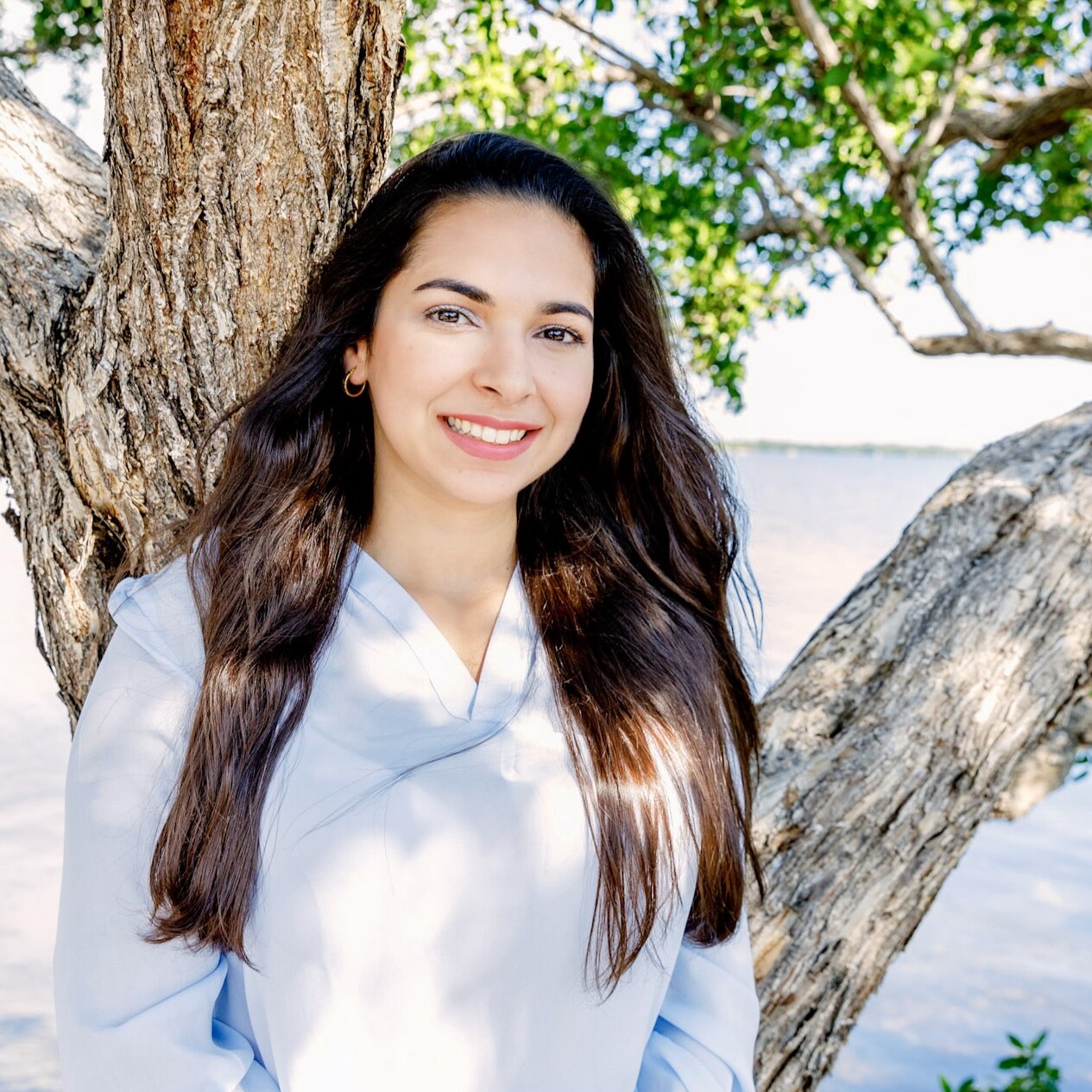
Alexandra Urdaneta is the Communications and Network Manager for Network Weaver and Leadership Learning Community (LLC), where she leads communications strategy, community engagement, and supports programming and strategic initiatives. She cares deeply about creating meaningful connections and sharing resources and wisdom among changemakers and community organizers.
Born in Caracas, Venezuela, and raised in South Florida, Alexandra’s early experience navigating migration instilled a deep appreciation for community resilience, interconnectedness, and our relationship with the natural world. Her career spans education, non-profit programming, direct services, and event management. Grounded by her graduate studies in Community and Social Change and values of collaboration, love, freedom, and innovation, she is inspired by LLC’s commitment to “just work in just ways” and brings curiosity, kindness, and a network-weaving lens to her work.
Photo by Yulian Alexeyev on Unsplash
Network Weaver is dedicated to offering free content to all – in support of equity, justice and transformation for all.
We appreciate your support!
I am text block. Click edit button to change this text. Lorem ipsum dolor sit amet, consectetur adipiscing elit. Ut elit tellus, luctus nec ullamcorper mattis, pulvinar dapibus leo.